
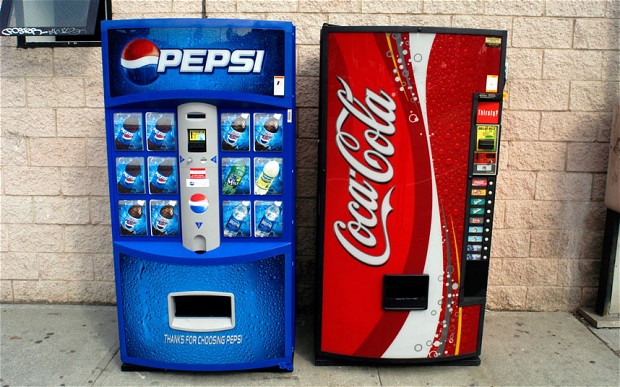
Brand preferences are often formed on college campuses and in terms of soft drinks, it seems students are looking for different ways to quench their thirst. According to a recent national survey of college students by research firm DigitalMediaIX, when offered a choice, 44% of college students favor bottled water, compared to 24% of students who would chose carbonated drinks.
In addition to current preferences, negative press coverage of health issues concerning sugary soft drinks, contribute to the trend of less and less carbonation in the diet of college students. As a result, soft drink companies like Coca-Cola and Pepsi have become more creative when it comes to engaging with one of their major target markets.
With countless advertising awards and YouTube videos gone viral, both Pepsi and Coca-Cola understand how to run a successful campaign to make their product resonate in the minds of consumers. However, when it comes to one of their major demographics, 18-24 year-old college students, their popularity is on the decline. How are these companies combating this and who does it seem, is winning?
Social media is now an important weapon being relied upon to reach this demographic. One example was Pepsi attempting to engage young consumers, by revamping the Pepsi Challenge and co-branding with the popular show, The X-Factor. The TV show used every opportunity to feature the Pepsi logo. The show has also relied on Facebook and Twitter to engage younger viewers and help them interact, by hosting polls for fans to vote for their favorite finalist on either of these social media platforms. With 2.8 million Twitter followers and nearly 2 million Facebook fans, this program was arguably a social media success.
Although the Pepsi Challenge revamp was considered important, Coca-Cola was actually the first to affiliate their brand with a popular TV show and incorporate social media. Coca-Cola has had a long-standing relationship with American Idol, which paved the way for social media engagement; Facebook and Twitter have been used to follow and vote for contestants. Coca-Cola, recognized the importance of the youth demographic to their business, saw a television show popular with youth, and was able to engage this market and influence college students in terms of carbonated beverages. In measuring success, American Idol has registered more than 10 million Facebook fans and nearly 750,000 Twitter followers. What is less clear is how many of these fans and followers are college students.
More focused efforts have been made on college campuses across the country; Coca-Cola has developed student liaison programs to represent the brand and hired a network of brand ambassadors to promote their marketing plans. With the help of MRY, a social media agency based in Manhattan, Coca-Cola has established brand ambassadors at more than 25 universities around the country.
These ambassadors are responsible for peer-to-peer marketing, a newfound tactic that has proven to be the most effective way to reach such a distracted and complex student demographic. Through the utilization of these ambassador’s personal social networks on campus, Coca-Cola is able to reach students in ways that other brands cannot – such as through Facebook, Twitter, and email. Coca-Cola is capitalizing on an emerging trend within marketing – peer references. Students are most likely to listen to a recommendation from a friend over almost any other reference.
Results from the DigitalMediaiX survey show that Coca-Cola’s innovative and interactive efforts have been successful with college students– the Coke brand leads all carbonated beverages, with 19%. When you add all of the Coke extensions including Diet Coke, Cherry Coke, and Coke Zero, Coca-Cola has nearly 40% of the college student market. Pepsi and its extensions, Diet Pepsi, and Pepsi Next manage to garner a combined 12%.
While this may suggest that “Things go better with Coke,” the DigitalMediaIX survey also showed college students have a stronger preference for two other non-carbonated soft drink brands – Gatorade and AriZona Ice Tea, not part of either of the cola giants’ portfolios. And so, the battle to quench the thirst on college campuses around the country continues, often with the student foot soldier fighting on the front lines in the cola and soft drink wars.



Photos Courtesy of UW-Madison Archives
