

China, with its rapidly expanding consumer market, is becoming increasingly important among foreign companies. While social media is developing rapidly in the U.S., Chinese social media platforms, including Weibo and Renren, are also playing important roles in connecting Chinese consumers with brands.
A recent study by GlobalScan Radar showed 71% of China’s consumers use social media to find out information regarding health, social, safety, and environmental issues. Food issues, relating to milk products (Mengniu), meat (Shuanghui), and poultry (KFC) have been on the forefront. Also, safety (Volkswagen), customer service (Apple), and environmental (ConocoPhillips) have become hot topics on Chinese social media
Three major international companies are currently dealing with PR crises’ in China: Yum! Brands, Apple, and Volkswagen. Two of these companies were unprepared to deal with the local social media fall-out, while the third seemed to fare better because it was actively using integrated marketing techniques to manage online and social media relating to its brand. The following analysis provides some perspective into the issues these companies faced and attempts to navigate the dynamic social media landscape in China.
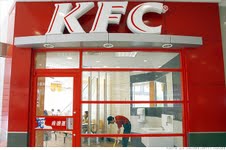
KFC is the most successful fast food chain in China, with over 4,000 outlets. The company has established a modest presence in social media and is an active brand on Sina Weibo. KFC was recently recognized in the DMIX 100 list of leading digital brands among university students in China (http://bit.ly/YhE3yD). However, last December, an investigation of KFC’s food safety in China resulted in a string of negative publicity, which snowballed, resulting in a social media firestorm. In an attempt to restore its tarnished brand image, KFC’s parent company, Yum! Brands, posted an open letter on its Sina Weibo page in January apologizing to Chinese consumers about the recent food scandal. However, the apology received overwhelming criticism from Chinese consumers. Some commented, “Get out of China,” while others said, “You give your apology, but I won’t return to your restaurant to eat.”
Further adding to KFC’s negative woes was a highly publicized outbreak of Avian flu in March, which consumers worried would affect poultry supplies. Sales in stores suffered and KFC recognized it needed to rebuild its brand image and chose Sina Weibo to focus initial efforts. KFC actively promoted a charity to provide funds supporting victims of the recent earthquake tragedy in Sichuan on Sina Weibo. This took the discussion away from the poultry issues and was able to position KFC as supportive of a cause important to people in China.
KFC introduced a poetry contest on both Sina Weibo and Renren. The company asked fans to write poems that include the phrase, “The chickens are innocent,” suggesting the blame for illicit drug use was at the farms. The winner would receive an iPad mini.
In addition, the company became much more active in responding to customers on Renren and Sina Weibo and made attempts to engage important influencers of public opinion.
Earlier this year, Apple and Volkswagen went into crisis mode, when CCTV, the national television network in China, had a special broadcast criticizing their brands. On March 15, World Consumer Rights Day, the network held an annual special targeting companies and issues of concern to Chinese consumers. International brands are often targeted in these broadcasts. In Apple’s case, it related to customer-service policies for Chinese customers, which differ from its practices in other countries; for Volkswagen it was a safety issue involving a substandard direct-shift gearbox system.
Because Apple has no real social media presence, the company was not prepared to respond effectively. Finally, after two weeks, the company resorted to a letter to consumers on the company web site by CEO Tim Cook stating, “We are aware that owing to insufficient external communication, some consider Apple’s attitude to be arrogant, inattentive or indifferent to consumer feedback,” The statement received new waves of criticism. Apple then dispatched its Senior Vice President, Jeff Williams, from Beijing, to deal with the PR crisis. With only eight Apple stores in China, Apple’s underdeveloped infrastructure in the market might be part of the reason for customers’ complaints. Apple is fortunate that its overall image in China is positive and that the brand and products still have many fans in this market. However, this negative publicity and Apple’s weak response has certainly hurt the company’s brand perception. Whether or not Apple will embrace social media in China as a result of this issue is not clear. Nevertheless, the company will need to find a way to communicate with Chinese consumers more effectively and timely.
Unlike Apple, Volkswagen published an announcement on Sina Weibo, promising to solve the gearbox system issue for consumers’ right after the TV show. Volkswagen had the advantage of a strong online and social media presence and was able to quickly communicate this to its customer base.
A recent article by McKinsey discussed how to manage a crisis in China’s complex social media environment.
Here are four important crisis management tools:
The important lesson for companies to learn from these brands’ experience is you need to be present where your customers are active. The Chinese consumer is very engaged in social media. Brands that are not equally engaged risk crises like these, which can significantly affect a company’s brand image and impact sales.
http://usa.chinadaily.com.cn/epaper/2013-04/03/content_16373193.htm
http://micgadget.com/34556/apples-op-chief-is-in-beijing-to-deal-with-pr-crisis/



Photos Courtesy of UW-Madison Archives
